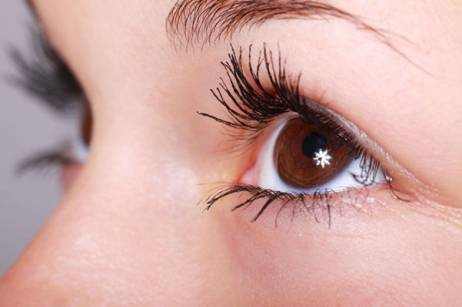
Waking up with swollen or puffy eyes—clinically identified as periorbital edema—is a physiological phenomenon that affects millions. While often dismissed as a mere cosmetic annoyance, from the perspective of medical engineering and fluid dynamics, it is a complex manifestation of systemic fluid redistribution, vascular permeability, and lymphatic stasis.
To understand why this happens and how to fix it, we must look beyond the surface and examine the biological and technical mechanisms at play.
The Anatomy of Periorbital Edema: Why the Eyes?
The skin surrounding the human eye is uniquely thin, often measuring less than 0.5 mm in thickness. This lack of subcutaneous fat makes any fluid accumulation immediately visible. During sleep, several factors converge to create the “puffy” look:
Vision Support: Quality AREDS 2 Formula eye vitamins can be found on Amazon.
- Horizontal Stasis: In a recumbent position, gravity no longer assists in draining fluid from the head. This leads to an increase in hydrostatic pressure within the facial capillaries.
- Lack of the “Muscle Pump”: The act of blinking acts as a natural pump for the lymphatic system. During REM and deep sleep, this pump is inactive, leading to localized fluid retention.
- Osmotic Imbalance: According to research published by the National Institutes of Health (NIH), high sodium intake causes the body to retain water in the interstitial spaces to maintain salt concentration balance.
Technical Analysis: Medical Equipment and Diagnostic Tools
When patients seek professional help for chronic puffiness, we move into the realm of medical diagnostics. Identifying whether the swelling is edematous (fluid-based) or steatoblepharon (fat-based) is crucial.
1. High-Frequency Ultrasound (HFUS) in Dermatology As a medical equipment engineer, I believe that the use of high-frequency ultrasound (20 MHz and above) is the gold standard for differentiating between fluid and fat prolapse. From a technical standpoint, the axial resolution of these machines allows us to see the exact layer where the fluid is trapped. When evaluating these devices, I look for the signal-to-noise ratio; a cleaner image allows a clinician to see if the “puffiness” is actually a weakened orbital septum allowing fat pads to bulge, which requires surgery (blepharoplasty) rather than topical treatment.
2. Microcurrent and Galvanic Stimulation Devices like the NuFace or professional-grade galvanic machines use low-level electrical currents. From an engineering perspective, these tools work by increasing adenosine triphosphate (ATP) production. ATP is the energy currency of the cell, and increasing its levels improves the efficiency of the sodium-potassium pump at the cellular membrane level.
Expert Engineering Insight: When choosing a microcurrent device, pay attention to the microampere (µA) range. Devices that operate between 200 and 600 µA are optimal. Anything lower may be ineffective, while significantly higher levels can cause muscle twitching without the desired lymphatic drainage benefit.
3. Cold Laser Therapy (LLLT) Low-Level Laser Therapy (LLLT) is increasingly used to reduce inflammation. By using specific wavelengths (typically 633nm to 830nm), these devices stimulate mitochondrial activity. As an engineer, I focus on the energy density (J/cm²). A precise dosage of light can stabilize the capillary walls, making them less “leaky” and reducing the morning-after edema.
Clinical Triggers and Evidence-Based Causes
It is vital to distinguish between lifestyle-induced puffiness and underlying medical conditions. The American Academy of Ophthalmology highlights several key triggers:
Expert Choice: Recommended by eye care professionals for managing dry eyes, styes, and blepharitis, this Heated Eye Mask provides the consistent moist heat therapy endorsed by the American Academy of Ophthalmology. It’s an effective, reusable solution for soothing irritation and improving oil gland function. Available on Amazon.
- Allergic Conjunctivitis: Histamines increase vascular permeability, allowing fluid to escape into the tissue.
- Thyroid Eye Disease (Graves’ Disease): This causes inflammation of the extraocular muscles.
- Renal Function: If the kidneys are not filtering sodium effectively, systemic edema often manifests first in the thinnest skin—the eyelids.
- Contact Dermatitis: Reaction to evening skincare products (fragrances or preservatives) can cause localized swelling.
Engineering Your Morning Routine: The Thermodynamics of Recovery
If the cause is not pathological, the solution lies in thermodynamics. Applying a cold stimulus causes immediate vasoconstriction.
As a medical equipment engineer, I believe that the material science of your “cold compress” matters. While a spoon or a cucumber works, a phase-change material (PCM) mask is far superior. PCMs are engineered to maintain a constant temperature (around 10°C to 15°C) for an extended period, providing a steady thermal gradient that constricts vessels without causing “ice burn” or rebound vasodilation.
Nutritional Strategy: The Electrolyte Balance
To combat morning puffiness, you must manage your internal “plumbing.” I recommend a diet rich in natural diuretics and potassium-rich foods. Potassium is the direct antagonist to sodium; it helps your cells release trapped water.
Specialized Care: For persistent itching or flaking, eye care specialists recommend targeted formulas like this BetterLids Eyelid Ointment . This preservative-free, dermatologist-tested oat complex is a top choice for soothing sensitive skin and managing symptoms of blepharitis. Available for easy ordering on Amazon.
- Asparagus: Contains asparagine, an amino acid that supports kidney function and fluid excretion.
- Cucumbers and Watermelon: High water content combined with caffeic acid helps reduce swelling.
- Dandelion Tea: A powerful natural diuretic that increases the glomerular filtration rate in the kidneys.
Reyus Mammadli’s Personal Recommendation
For those struggling with persistent morning puffiness, my professional advice is to focus on lymphatic positioning.
I highly recommend using a wedge pillow designed to keep the head at a 15 to 20-degree angle. From a mechanical engineering perspective, this slight incline is the “sweet spot” where gravity assists lymphatic drainage without putting undue strain on the cervical spine.
Additionally, if you use a vibration-based eye massager, ensure it utilizes transdermal sonic pulsations rather than simple mechanical thumping. Sonic pulsations (like those found in high-end silicone devices) are much more effective at moving interstitial fluid through the lymphatic channels without tugging on the collagen fibers of the skin.
Remember, if your eyes are puffy along with swelling in your ankles or hands, this is a systemic sign. Do not ignore it; consult a physician to check your heart and kidney health.